Employee Onboarding Checklist
By TNTSEO United
Last updated: September 2026
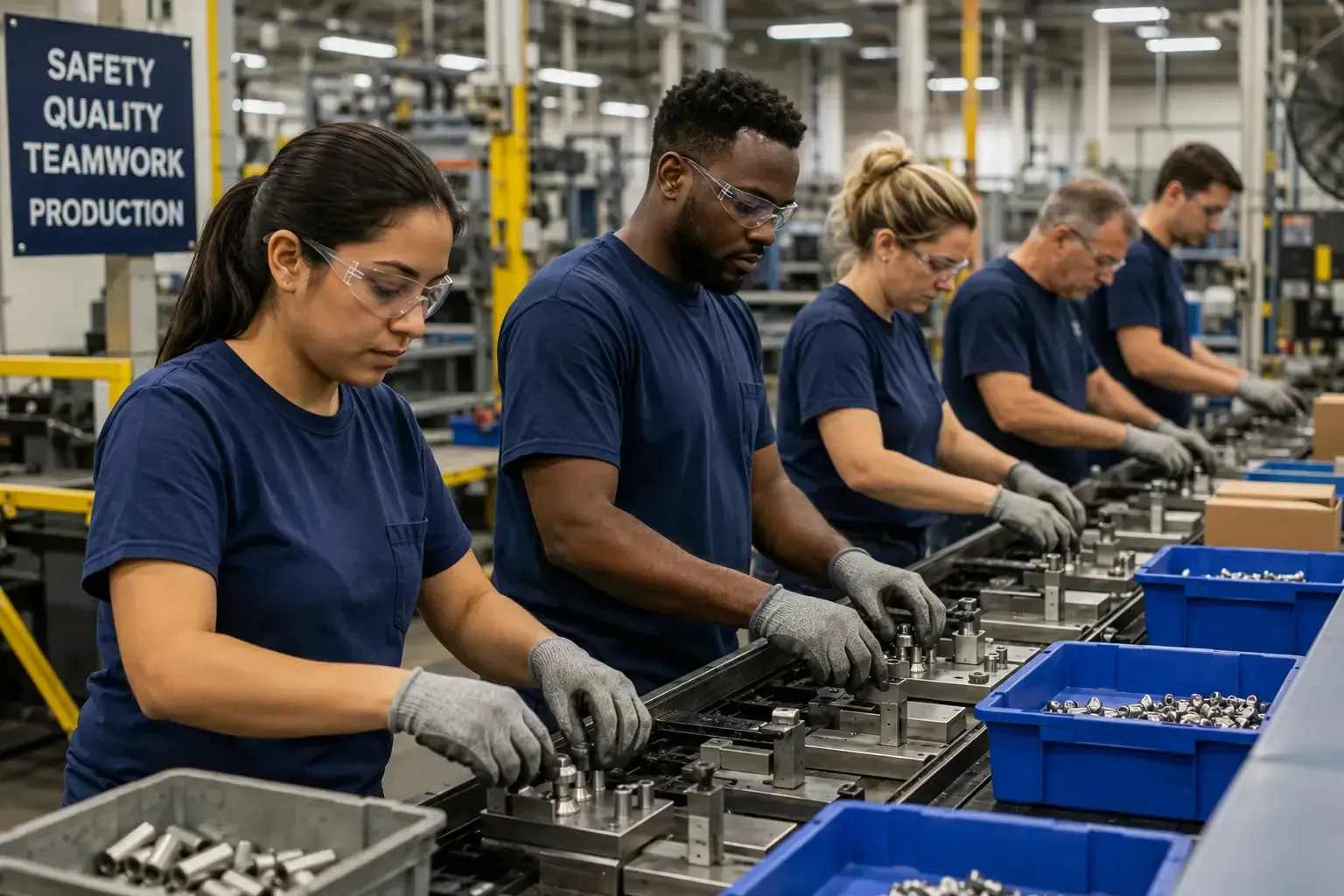
An employee onboarding checklist for hourly warehouse and production hires should separate paperwork deadlines, training needed before assigned work, and practical support through the opening weeks. Assign an owner to each task, record completion, and make the supervisor responsible for confirming what the employee is ready to do.
Under federal rules, employers generally must examine a new hire's Form I-9 documents within three business days after work begins (8 CFR 274a.2), and must ensure forklift operators successfully complete required training and evaluation before independent operation (29 CFR 1910.178(l)).
Use the checklist below as a working template, then apply the exceptions and agency instructions explained beneath it. At FIS Recruitment, we help employers with onboarding administration for our temporary employees.
The checklist at a glance
Use this checklist to assign the paperwork, safety and supervisor tasks before a new employee arrives. Record the responsible person's name and completion date in your own copy. The source column separates legal obligations from good practice; the suggested check-in schedule is a management choice, not a statutory deadline.
| When | Task | Who owns it | Rule or source |
|---|---|---|---|
| Before day one | Confirm start date, shift, pay, arrival point, clothing and contact person in writing. | Hiring manager | Good practice |
| Before day one | Request equipment and access; name the first-shift lead. | Supervisor | Good practice |
| At hire, New York | Provide the required written pay notice. | HR or payroll | NY DOL, Notice of Pay Rate |
| Day one | Employee completes and signs Form I-9 Section 1. | Employee; employer checks completion | USCIS; 8 CFR 274a.2(b)(1)(i) |
| At the start of work | Request signed Form W-4 for federal withholding. | Payroll | IRS, Hiring employees |
| At initial assignment | Provide effective information and training on hazardous chemicals in the work area. | Employer's safety lead | 29 CFR 1910.1200(h)(1) |
| Before independent forklift operation | Ensure required training and evaluation are complete; document certification. | Employer and qualified trainer/evaluator | 29 CFR 1910.178(l) |
| Day one | Walk the site, show exits, issue assigned PPE and introduce the lead. | Supervisor | Good practice |
| Within three business days after work begins | Examine I-9 documents and complete Section 2. For employment lasting less than three business days, complete at hire. | Employer or authorized representative | 8 CFR 274a.2(b)(1)(ii)-(iii) |
| First week | Assign a buddy, explain the learning pace and hold a check-in. | Supervisor | Good practice |
| Within the reporting deadline | Report the hire: New York, 20 calendar days; Pennsylvania, 20 days from hire. | Payroll or designated reporting owner | NY Tax Department; 42 U.S.C. 653a; PA CareerLink reporting |
| First 30 days | Review attendance, safety, progress and whether the job matches expectations. | Supervisor | Good practice |
| Ongoing | Evaluate forklift performance at least every three years; address earlier refresher-training triggers. | Employer and evaluator | 29 CFR 1910.178(l)(4) |
Sources: eCFR regulations as of September 1, 2026; 42 U.S.C. 653a, 2023 edition; USCIS, IRS, New York DOL, New York Tax Department and Pennsylvania DLI guidance checked September 18, 2026. Rows marked good practice are suggested operating steps.
Before day one
Send the new hire a clear arrival plan and give a named supervisor ownership of the opening shift. Confirm the work arrangement in writing, request the equipment and access the assignment needs, and prepare applicable notices. Treat this as a handoff to a person, not simply an email to a department.
Include the start date, shift hours, pay rate, report-to person, parking or entrance instructions, and what to wear and bring. Ask the employee to confirm receipt. Tell the shift lead which tasks are planned and who will meet the employee if the lead is unavailable.
For New York hires, the Department of Labor requires a written pay notice, including pay rates, payday and employer information. Its guidance calls for English and the employee's primary language when a translation is available. Use the agency's applicable notice; do not assume an informal offer message meets the requirement.
Day one: paperwork with a clock on it
Under federal rules, employers generally must examine a new hire's Form I-9 documents within three business days after work begins (8 CFR 274a.2), and must ensure forklift operators successfully complete required training and evaluation before independent operation (29 CFR 1910.178(l)).
USCIS requires Section 1 to be completed and signed no later than the employee's first day of work for pay. It may be completed after the offer is accepted, before work begins.
Under 8 CFR 274a.2(b)(1)(ii)-(iii), the employer must examine the documents and complete Section 2 within three business days of hire; USCIS describes this as after the first day of employment. If the employment will last less than three business days, complete the process at hire. Check USCIS guidance for document, receipt or authorized alternative-examination questions.
The IRS directs employers to request a signed Form W-4 when employees start work and apply it to the first wage payment. Ask payroll which state withholding forms apply; New York's Tax Department explains Form IT-2104 for state withholding.
The New York Tax Department sets a general deadline of 20 calendar days from hire. Pennsylvania DLI's employer guidance also specifies 20 days, the federal maximum under 42 U.S.C. 653a, and directs employers to the PA CareerLink reporting program. Check agency instructions for electronic reporting schedules, multistate arrangements and special cases. We cannot give legal advice; confirm your obligations with the agency or an employment attorney.
Safety training that must come before the work
Match the safety preparation to the work the employee will actually perform. Hazard communication training addresses the chemicals in the assigned work area, while forklift operation has its own training and evaluation requirements. Keep the supervisor's task assignments aligned with completed training, and record who is responsible for any remaining instruction.
29 CFR 1910.1200(h)(1) requires effective hazardous-chemical information and training at initial assignment and whenever a new chemical hazard the employees have not been trained about is introduced into their work area. Do not treat attendance at a general welcome session as confirmation that this work-area training is complete.
For forklift operators, 29 CFR 1910.178(l) calls for formal instruction, practical training and workplace evaluation. Supervised trainee operation is allowed only under the rule's conditions, including competent direct supervision and operation that does not endanger the trainee or others.
Under OSHA's 29 CFR 1910.178(l)(6), the employer's certification must record:
- The operator's name.
- The training date.
- The evaluation date.
- The identity of the people performing the training or evaluation.
OSHA's 29 CFR 1910.178(l)(4) requires performance evaluation at least every three years, plus relevant refresher training for specified triggers such as unsafe operation, a near miss or a different truck type. As good practice, walk the site, show emergency exits and issue assigned PPE. This checklist is not a complete inventory of site-specific safety obligations.
The first week decides whether they stay
Use the opening week to check whether the employee understands the job and can ask for help without guessing. Assign a buddy or lead, explain the pace you expect during learning, and compare the employee's experience with the role described during hiring. Treat concerns as items to resolve, not just record.
As good practice, check in at the end of the opening shift and again at week's end. Ask what was unclear, which task needs another demonstration and whether the schedule matches what was discussed. Let the employee describe the next shift's plan back to the lead.
Give each issue an owner. If access is missing, say who will arrange it. If the pace is unrealistic for the current stage of learning, revise the ramp plan with the supervisor. Avoid promising that a checklist alone will prevent someone from leaving.
Days 8 to 30
Use the remainder of the opening month to compare actual progress with a realistic learning plan. Review attendance, safe work habits and productivity together, then ask directly whether the job matches what the employee was told. End the conversation with a specific support action and a named person responsible for it.
A suggested 30-day review should use observed work, not a vague impression of attitude. Ask the lead which tasks the employee can perform confidently and where more instruction is needed. Review attendance expectations and any unresolved equipment or access requests.
Ask, "Is this the job and shift you expected?" Record the answer and agree on the next step. This review timing is good practice, not a federal deadline or a substitute for training that should already have occurred.
Onboarding temps placed by a staffing agency
Separate the agency's hiring and payroll administration from the host site's operational welcome and safety preparation. Confirm the paperwork handoff with the agency, while assigning someone at your facility to explain the work area, reporting relationships and approved tasks. Payroll responsibility does not remove the host employer's role in protecting temporary workers.
OSHA identifies staffing agencies and host employers as jointly responsible for temporary-worker safety, with the extent depending on the facts. Its warehouse guidance describes host employers providing training tailored to workplace equipment and hazards. Agree on responsibilities before the assignment starts.
At FIS Recruitment, our temporary workers stay on our payroll while they work for you, and we handle their hiring paperwork and onboarding administration. Review how we screen candidates and how temp to hire works when planning the arrangement. Keep a named site lead responsible for the local handoff.
Frequently asked questions
Use these answers to check the common timing and responsibility questions before approving a new hire's assignment. The legal answers cite the rules explained above; the practical recommendations are planning choices. For an unusual document situation, reporting arrangement or training history, consult the responsible agency before treating the checklist as complete.
What should be on a new employee onboarding checklist?
Include hiring paperwork, payroll setup, applicable safety training, a named supervisor and follow-up conversations. For warehouse and production roles, separate permission to perform assigned work from general orientation. As good practice, confirm the shift and arrival instructions, arrange equipment and access, assign a buddy, and record completion against each task. Give every outstanding item an owner so the employee knows where to get help.
How long do you have to complete Form I-9 for a new hire?
USCIS requires the employee to complete and sign Section 1 by the first day of employment. Under 8 CFR 274a.2, the employer generally has three business days after work begins to examine the documents and complete Section 2. If the employment lasts less than three business days, the employer must complete that process at hire. Assign someone to track both parts; do not apply the employer's later deadline to the employee's part.
Do forklift operators need to be retrained at a new job?
A new job does not automatically require repeating every forklift training topic. Under 29 CFR 1910.178(l)(5), appropriate previous training need not be duplicated when it fits the truck and working conditions and the operator has been evaluated and found competent. The employer still must ensure the required training and evaluation are complete and certify them. Review the actual assignment and training history before allowing independent operation.
When is new hire reporting due in New York and Pennsylvania?
New York's Tax Department generally requires reporting within 20 calendar days from hire, and Pennsylvania DLI instructs employers to report within 20 days of hire. Pennsylvania directs employers to PA CareerLink for reporting. Confirm who submits the report and retain a completion record as good practice. Follow the applicable agency instructions for electronic filing schedules, multistate reporting and special cases rather than assuming payroll enrollment completes the reporting task.
What safety training does a new warehouse employee need on day one?
Training depends on the assigned work and its hazards. Under 29 CFR 1910.1200(h)(1), information and training on hazardous chemicals in the work area are required at initial assignment. Under 29 CFR 1910.178(l), forklift operators need the required training and evaluation before independent operation. Add a site walk-through, exit orientation and assigned PPE to your practical checklist, and have the safety lead identify any additional obligations for the actual job.
Who handles onboarding paperwork for temporary workers from a staffing agency?
The staffing agency handles its own employees' hiring and payroll paperwork; the host should confirm that handoff before the assignment begins. The host still needs a local orientation owner and site-specific safety preparation. OSHA treats staffing agencies and host employers as jointly responsible for temporary-worker safety, with responsibility depending on the circumstances. Put the practical division of work in writing and identify who will confirm each required training task is complete.
Hiring hourly staff in the Lehigh Valley, Hazleton or Long Island?
Bring the shift, job duties, start date and site contact to your staffing conversation. At FIS Recruitment, we can discuss the hiring arrangement and onboarding handoff with your team. Use that conversation to assign the paperwork owner and the supervisor who will receive the employee at your facility.
Explore industrial staffing and warehouse staffing in the Lehigh Valley. Call 800.248.8687, email info@fisrecruitment.com, or open a requisition.
This article is not legal, tax or HR-compliance advice. Confirm obligations with the relevant agency or an employment attorney.